

Social media for consultants is the practice of using platforms like LinkedIn, TikTok, Instagram, YouTube, and Facebook to build visibility, establish expertise, and attract clients through content that demonstrates what you know and how you work. The consultants who are winning on social media right now are not posting every day, stressing over algorithms, or dancing on TikTok. They're using short-form video and strategic content to stay visible to the people who are already looking for what they offer.
Why Social Media Matters for Consultants Right Now
If you're a consultant who depends on referrals and word of mouth to keep your pipeline full, you already know the problem. Some months you're booked solid. Other months you're wondering where the next client is coming from. That feast-or-famine cycle is exhausting, and deep down you know that social media is the thing that would fix it because it puts you in front of people who have never heard of you before.
The challenge has never been whether social media works for consultants. It does. The challenge is figuring out how to actually do it when you're already busy delivering for the clients you have.
That stat should change how you think about this. You're not trying to "go viral" or become an influencer. You're making sure that when someone hears your name and looks you up, what they find confirms that you're the real deal.
Social media for consultants is a trust layer. It sits on top of the work you're already doing and makes every referral, every introduction, every discovery call more effective because the person already has a sense of who you are before you ever meet.
Which Platforms Actually Work for Consultants
You do not need to be on every platform. That's the fastest way to burn out and quit. The right move is to be on the platforms where your future clients are actually spending their time.
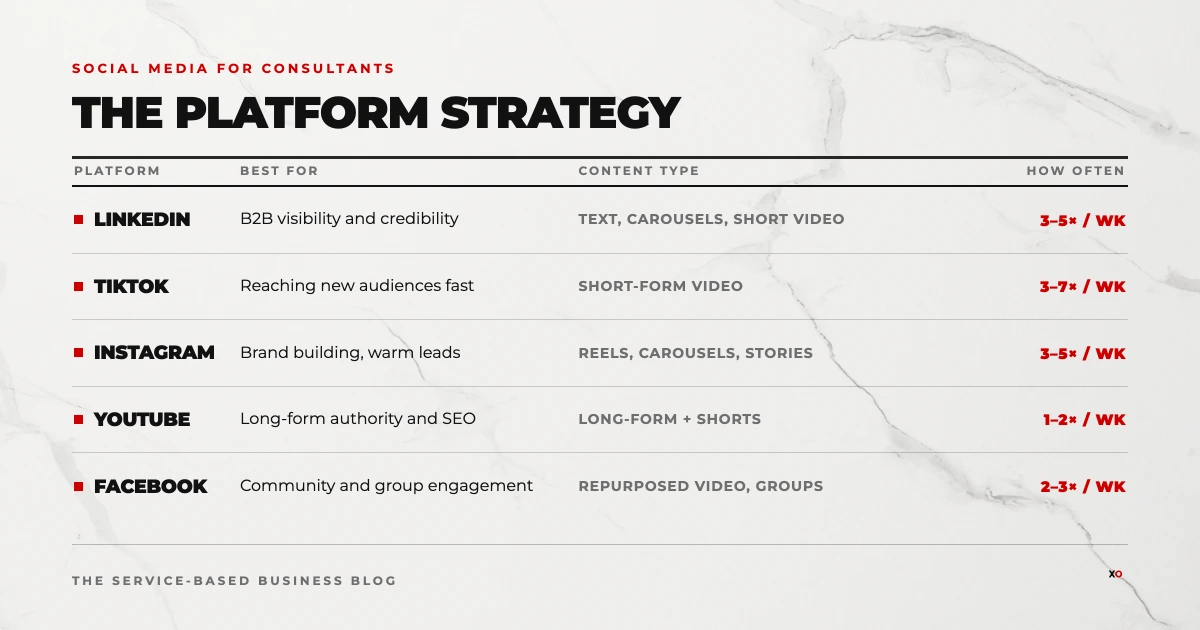
Here's what I've seen work:
| Platform | Best for | Content type | How often |
|---|---|---|---|
| B2B visibility, credibility, thought leadership | Text posts, carousels, short video, newsletters | 3-5x per week | |
| TikTok | Reach new audiences fast, demonstrate expertise | Short-form video (60 sec to 3 min) | 3-7x per week |
| Visual brand building, nurturing warm leads | Reels, carousels, stories | 3-5x per week | |
| YouTube | Long-form authority, SEO, evergreen content | Long-form video, Shorts | 1-2x long-form + Shorts 3-5x per week |
| Community building, group engagement, older demographics | Repurposed video, group posts | 2-3x per week |
LinkedIn is your foundation.
For consultants, LinkedIn is still where deals get started. 75% of B2B buyers use social media before making a purchasing decision, and LinkedIn is the platform where those buyers are doing their research. Your profile, your posts, and your activity there all signal whether you're active, current, and worth talking to.
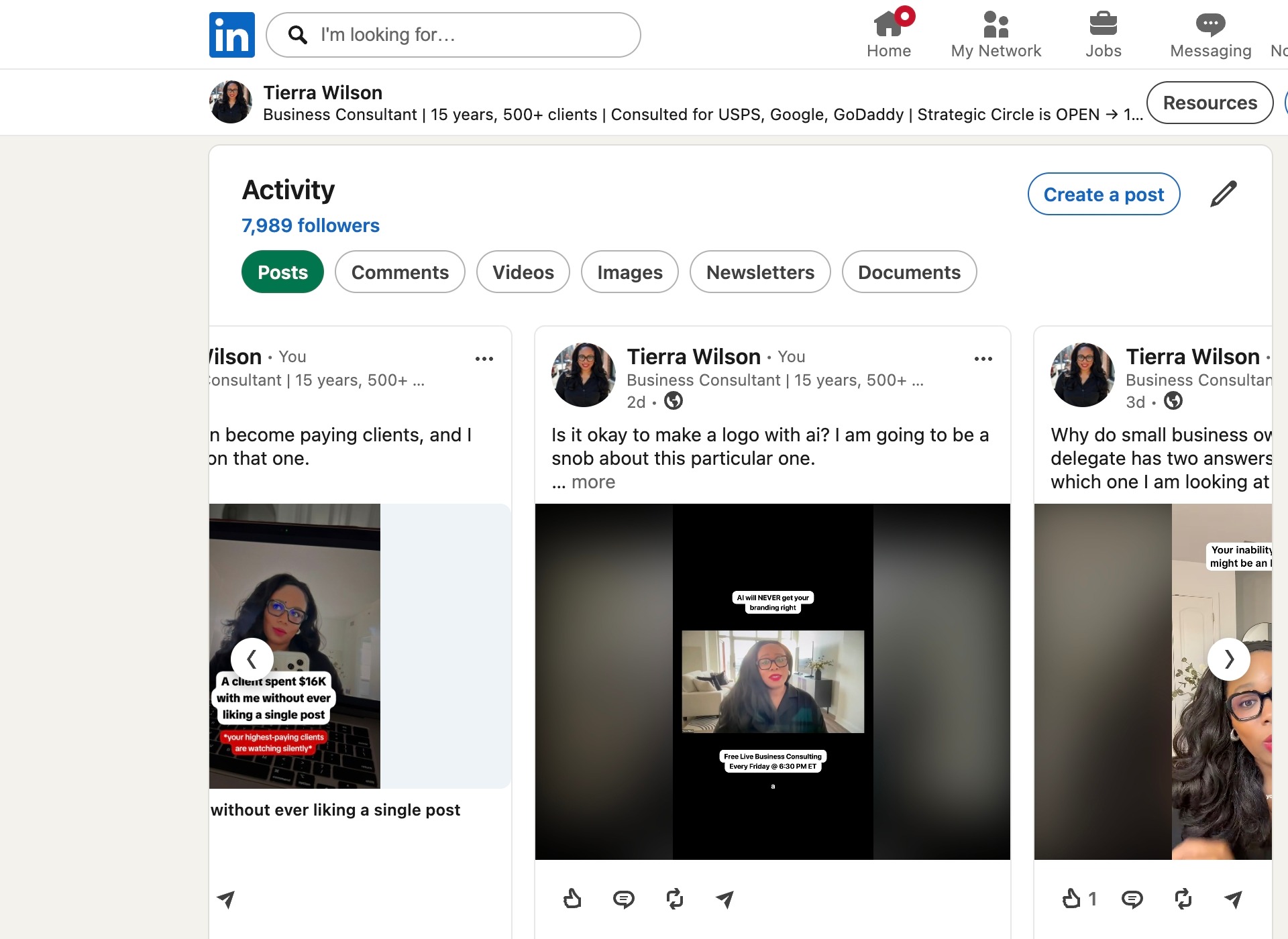
The problem is when LinkedIn becomes the ONLY platform and everything else gets ignored. That works if your content is incredibly consistent and your audience is exclusively corporations. For everyone else, you're leaving reach on the table.
Short-form video is where the growth is.
I know this is where some of you want to close the tab. But hear me out.
Short-form video on TikTok, Instagram Reels, and YouTube Shorts is where the attention is right now. And 80% of B2B marketers aren't using TikTok at all, which means the consultants who DO show up there have very little competition.
You don't have to dance. You don't have to point at text on the screen. You just talk to the camera the same way you'd talk to a client in a meeting. If you can explain something clearly in person, you can do it on video.
What to Post as a Consultant
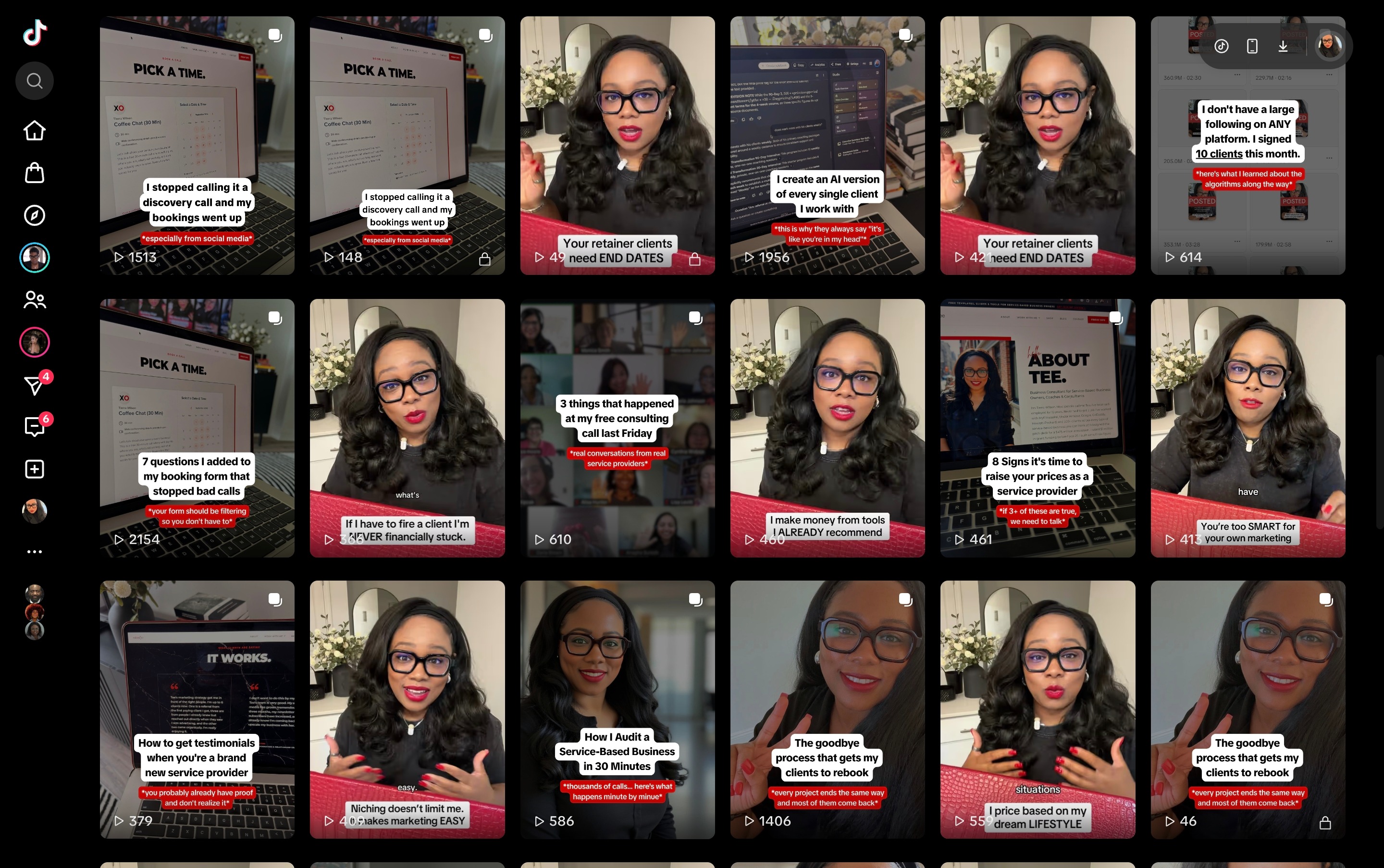
The number one question I hear from consultants is "what would I even post?" and the answer is simpler than you think. You already know what to post because you teach it every day in your client work.
The four content types that work
Teach what you know. Take a concept you explain to clients regularly and record yourself explaining it. You don't need a script, a studio, or a ring light. You need your phone and something you know well enough to explain without notes.
Show how you think. Walk through a real decision, a framework you use, or how you'd approach a common problem in your industry. Consultants sell their thinking. Your content should show what that thinking looks like.
Share your perspective on industry trends. When something happens in your field, give your take. Your audience wants to know how a consultant at your level interprets what's going on, not just that you know it happened.
Answer the questions your clients ask you. If a client asked you something this week, there are a hundred other people wondering the same thing. Record the answer.
You don't need to be creative to do this. You need to be consistent.
How to Stay Consistent Without Burning Out
This is where the whole thing falls apart for consultants. You post for two weeks, get busy with client work, disappear for a month, feel guilty, post twice, disappear again. Sound familiar?
The fix is a content system that works around your client schedule instead of competing with it.
Content batching
Pick one day per month. Block two to three hours. Record all of your videos in one sitting. That one session gives you enough content for the entire month across every platform if you repurpose it right.
I do this with my DFY social media clients. We schedule one recording session per month, and from that single session we create short-form videos, carousels, story content, and captions that cover TikTok, Instagram, LinkedIn, YouTube, and Facebook. The consultant shows up once. The content runs all month.
Repurposing
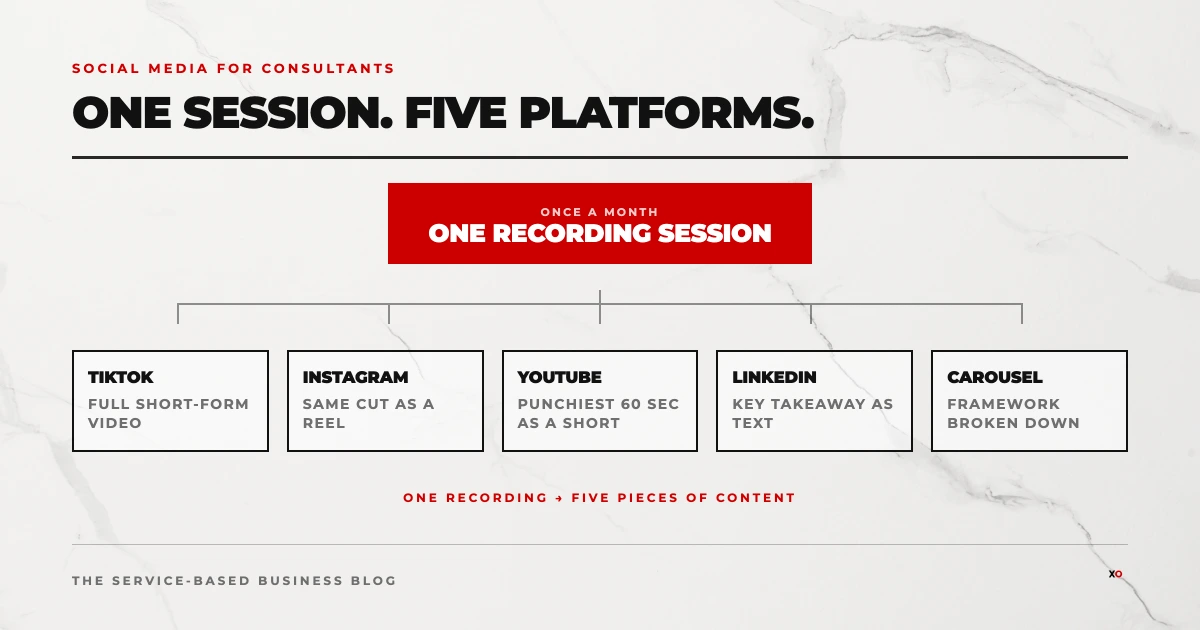
One piece of content should never live on just one platform. A 3-minute video you recorded for TikTok also becomes an Instagram Reel, a YouTube Short (trimmed to the punchiest 60 seconds), a LinkedIn text post pulling out the key takeaway, and a carousel breaking down the framework visually.
That one recording just became five pieces of content across five platforms. And you did the work once.
Scheduling
Use a scheduling tool to queue everything up after your batch session. Your content goes out on autopilot while you're on client calls, traveling, or just living your life. The best time to post is whenever the content actually goes out consistently. Consistency beats timing every time.
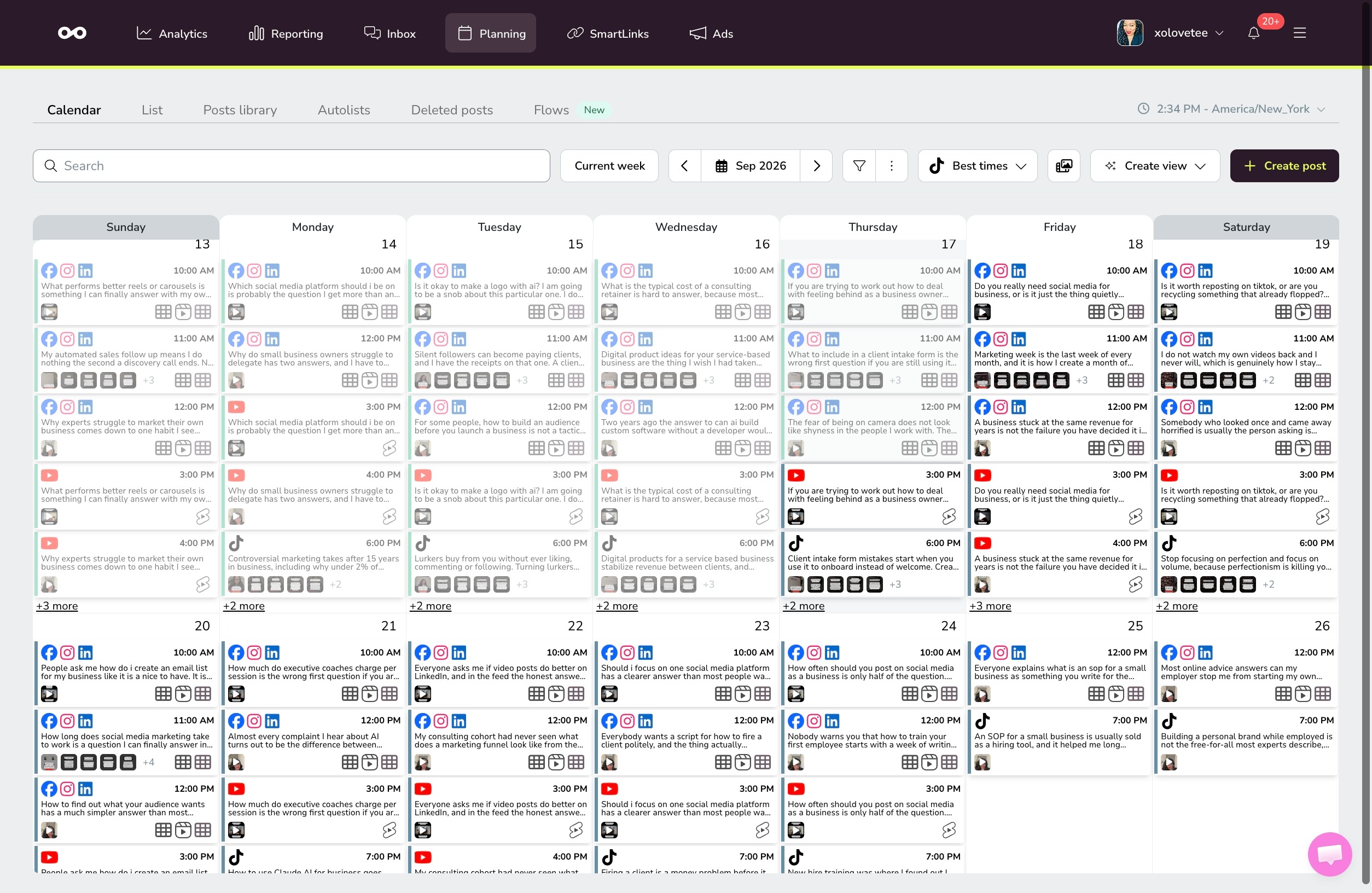
Pro tip: If you use Claude as your AI assistant, you can actually schedule your social media posts directly through the conversation using Metricool. You create the content and schedule it in the same workflow without switching between apps. If you're curious about how AI fits into the rest of your business beyond social media, I wrote a full guide on AI for small business that covers implementation across all five areas of your operations.
How to Actually Get Clients from Social Media (Not Just Followers)
All of the visibility in the world means nothing if you don't have a way to turn viewers into clients. And this is the piece that gets overlooked the most because people focus on content and forget the conversion.
You need three things working together:
A clear call to action on your content. Every post doesn't need a hard sell, but your audience should always know what the next step is. Book a call. Download the guide. Join the free session. If you're never asking, you're just entertaining people for free. Don't be afraid to use your CTAs. You're here to get clients, not just build an audience.
An email list you're actively growing. Social media is rented space. The algorithm decides who sees your content on any given day. Your email list is the one channel you own completely. Every piece of content should have a path that leads people to your list, whether that's a free resource, a newsletter, or a waitlist for your next offer. If you want to go deeper on the full sales and marketing strategy for service-based businesses, I wrote a complete guide on that too.
A funnel that connects your content to your offers. Someone watches your video, clicks the link, downloads your freebie, gets on your email list, and receives a sequence that introduces your coaching program or consulting service. Without that path built out, you're creating content and hoping for the best. Hope is not a marketing strategy.
The consultants who get real clients from social media are the ones who treat it as the top of a funnel, not the whole funnel.
The "I Don't Want to Be on Camera" Conversation
I have this conversation at least twice a month with consultants who want social media to work for them but genuinely do not want to be on video.
Here's what I'll tell you: video is the highest performing format on every platform right now. Short-form video drives the highest ROI among all video formats for B2B marketers according to Sprout Social's 2026 data. So if you're willing to get on camera, even occasionally, it will outperform every other type of content you can create.
But if being on camera is a hard no for you, there are other paths. Carousels perform well on LinkedIn and Instagram. Text-based LinkedIn posts can build real authority if you write from experience. And there are video formats that don't show your face, like screen recordings with voiceover, slide-based videos, or whiteboard explainers.
What I'd encourage you to consider is that the discomfort usually fades after the first ten recordings or so. And the consultants who push through that discomfort end up with a visibility advantage that their competitors can't replicate, because your face, your voice, and your presence on camera are something AI and competitors cannot copy.
When to Do Your Own Social Media vs. Hire It Out
This depends on two things: how much time you have and how much revenue social media represents for your business.
Do it yourself when:
- You're just getting started with social media and want to find your voice
- You have time in your schedule to create and post 3-5 times per week
- You enjoy the creative process and don't mind learning the platforms
- Your budget is better spent elsewhere right now
Hire someone when:
- You know social media would bring in clients but you keep pushing it to next week
- Your time is worth more spent on client delivery than content creation
- You've tried doing it yourself and you can't stay consistent
- You want to be on multiple platforms but can't manage them all
- You have the revenue to invest in visibility and want it done right
I run a done-for-you social media service for consultants and coaches. We handle everything from the recording session to editing, captions, scheduling, and posting across all five platforms. The consultant shows up once a month to record. We do the rest.
If that sounds like what you need, here's how it works.
The Mistakes Consultants Make on Social Media
Waiting until everything is perfect to start. Your first ten videos will not be your best. That's fine. The consultant who posts imperfect content consistently will always outperform the one who is still tweaking their brand kit six months from now.
Only posting on LinkedIn. LinkedIn matters, but putting all of your effort into one platform means you're invisible everywhere else. And your future clients are spending time on Instagram, TikTok, YouTube, and Facebook too, especially if they're not in a corporate environment.
Posting content that talks AT people instead of teaching them. The consultants who get clients from social media are the ones who give real value in their content. If someone can watch your video and walk away with something useful, they'll remember you when they need help with the bigger picture.
Treating social media like a task instead of a system. If you're creating content from scratch every time you sit down to post, you'll burn out. The consultants who stay consistent have a batch workflow, a repurposing system, and a scheduling tool. They spend a few hours once a month and they're covered.
Ignoring video because it feels uncomfortable. The discomfort is temporary. The visibility is permanent. Every video you post is working for you 24/7 long after you've moved on to other things.
Conclusion
Social media for consultants comes down to visibility and trust. You're not trying to become an influencer. You're making sure that when someone hears your name, Googles you, or gets referred to you, what they find online confirms what they've already heard.
The consultants winning right now are the ones who batch their content, show up on video, repurpose across platforms, and treat social media like a system rather than a chore. And 54% of buyers are eliminating vendors before the first meeting based on what they find online. That's the cost of being invisible.
Whether you do it yourself or hire someone, the important thing is that you start. Pick one platform, record one video, post it, and build from there.